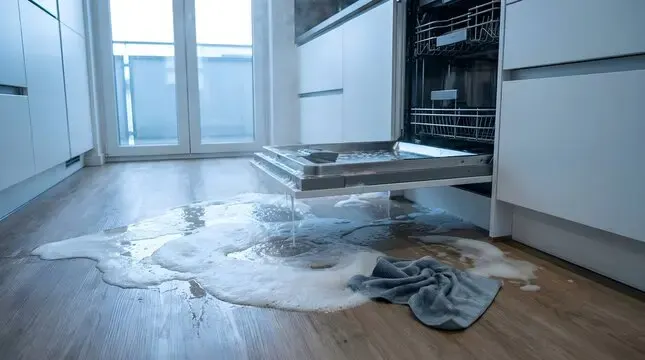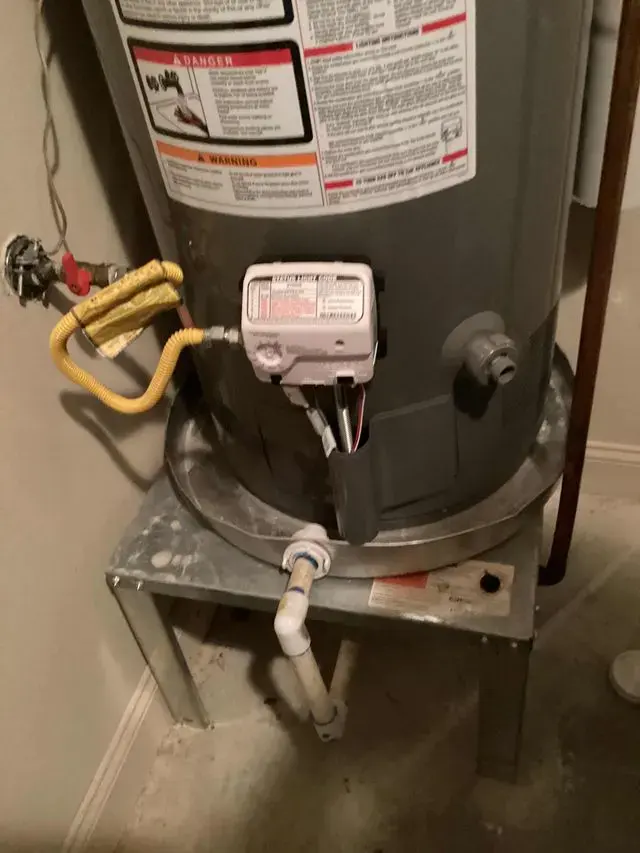
Most tank water heaters last about 8 to 12 years. Many Matthews homes built in the 1990s and 2000s are on their second or third tank, and the failures follow a pattern: a slow drip from the relief valve or drain valve, a leaking supply connection on top, or a rusted-through tank bottom that lets go all at once.
Where the water goes depends on where the tank sits
- Interior closets: water runs under the closet wall into hallways, carpet and baseboards, and down to the subfloor.
- Garages: the slab takes most of it, but water runs under the wall into the laundry room or finished rooms beside the garage.
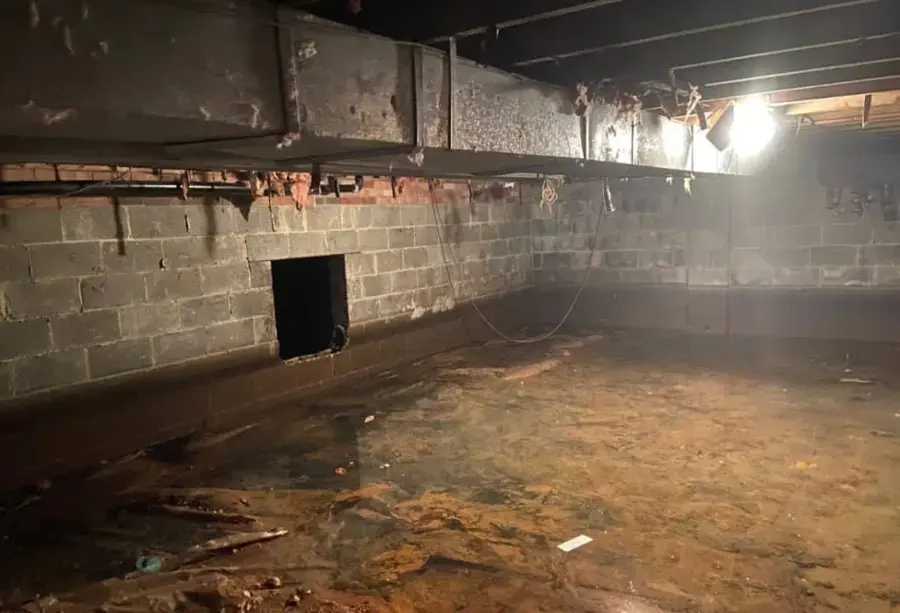
- Crawl spaces: the tank floods the barrier and soaks the insulation above it, often unnoticed until the hot water runs out.
- Attics: less common, but a leaking attic tank soaks insulation and the ceiling below.
Shut it down safely
Close the cold-water supply valve on top of the tank. For a gas heater, turn the control to off or pilot; for an electric heater, switch off its breaker. Do not drain a hot tank by hand. Then photograph the tank, the fittings and the wet areas before anything is moved.
Extraction and drying
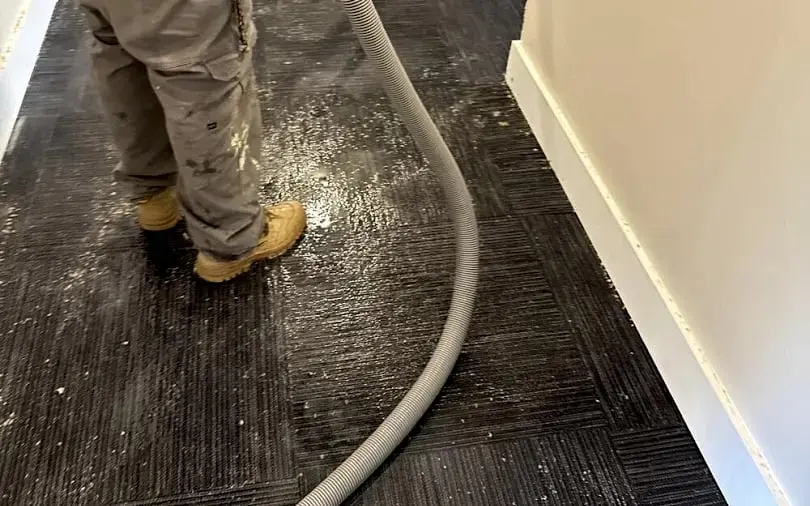
The extraction crew pulls standing water from floors and the crawl space. The tech who does the walkthrough maps moisture under the closet walls, beneath cabinets and in the subfloor. Pad and swollen baseboard are removed, and the drying team sets air movers and LGR dehumidifiers and logs readings daily. Water from the tank starts clean, so fast drying usually saves drywall and framing. The Department of Energy Energy Saver site has maintenance information on water heaters.