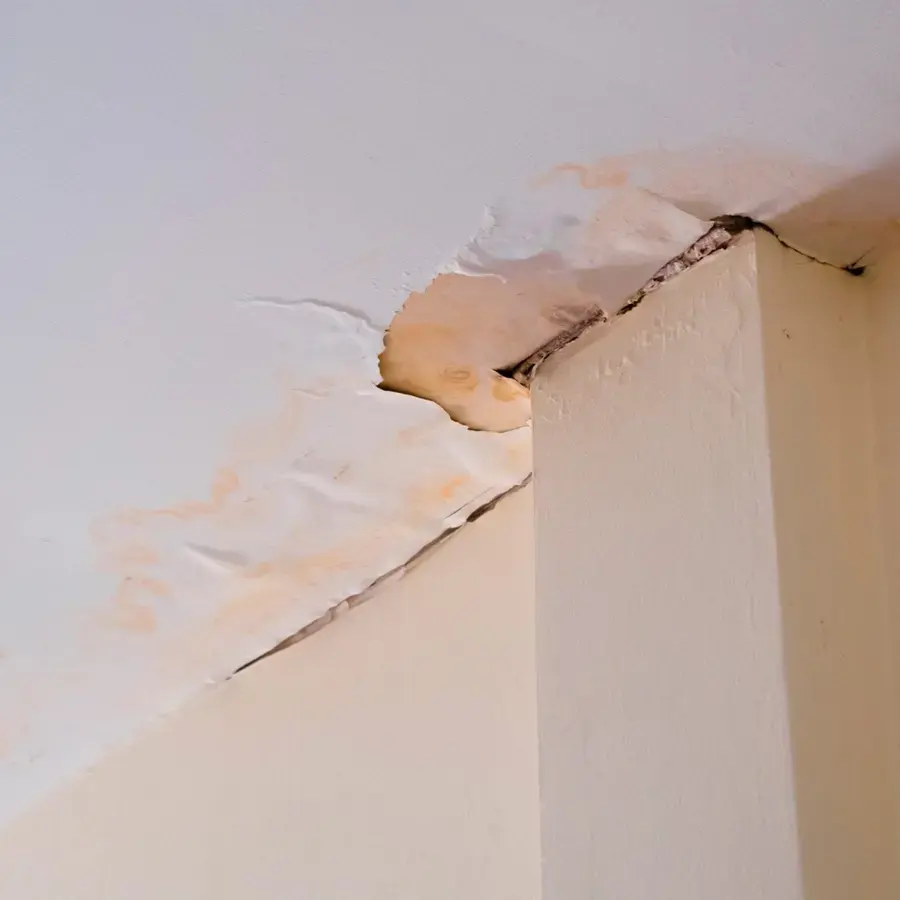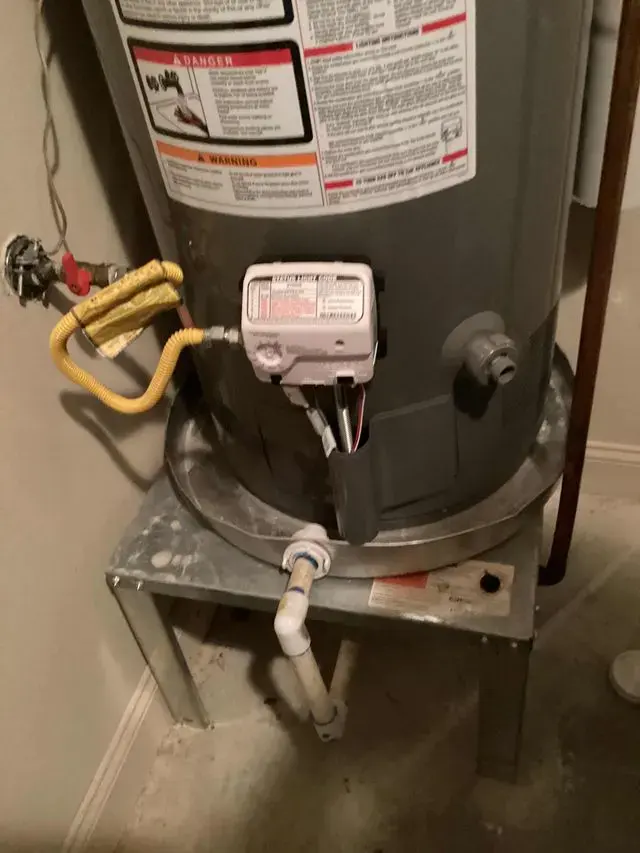
Appliance leaks are among the most common water losses in Matthews kitchens and laundry rooms. They also hide well: the appliance covers the leak, cabinets cover the floor, and click-together flooring spreads water underneath before it shows at a seam.
The usual culprits
- Washing machine hoses: rubber supply hoses crack and burst, and a second-floor laundry room sends water through the ceiling below.
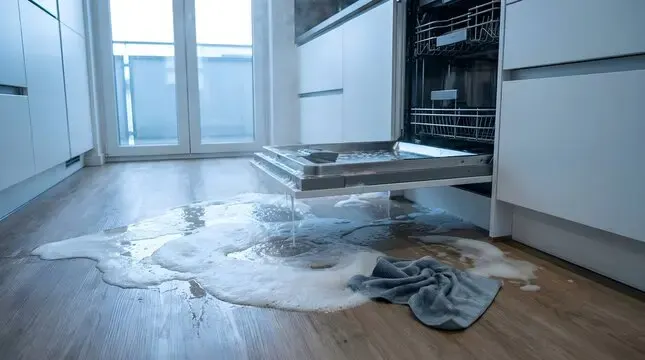
- Dishwashers: drain hose, door gasket and supply connection leaks spread under the cabinets on both sides.
- Refrigerator and ice-maker lines: thin plastic lines crack or pull loose behind the refrigerator.
- Garbage disposals and sink drains: slow leaks inside the sink base that rot the cabinet floor.
Clean water or gray water
A supply hose or an ice-maker line leaks clean water. A washer drain or a dishwasher drain leaks gray water, Category 2 under the IICRC S500 standard, because it carries detergent, food and soil. Gray water changes the job: soaked pad and porous materials are usually removed and surfaces cleaned before drying.
Drying under cabinets and flooring
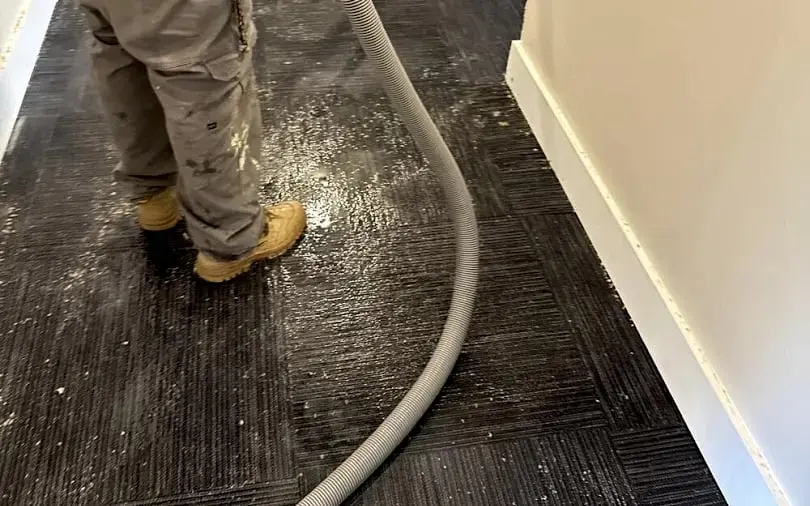
The tech who does the walkthrough maps moisture under the appliance, the cabinets and the flooring, then checks the ceiling or crawl space below. Toe kicks come off so the drying team can push air under the cabinet boxes, and small holes may go into the cabinet floor. Laminate and some engineered flooring trap water and may need to come up so the subfloor can dry. Readings are logged daily until everything reaches the drying goal.
If the leak reached the room below, see ceiling leak water damage.