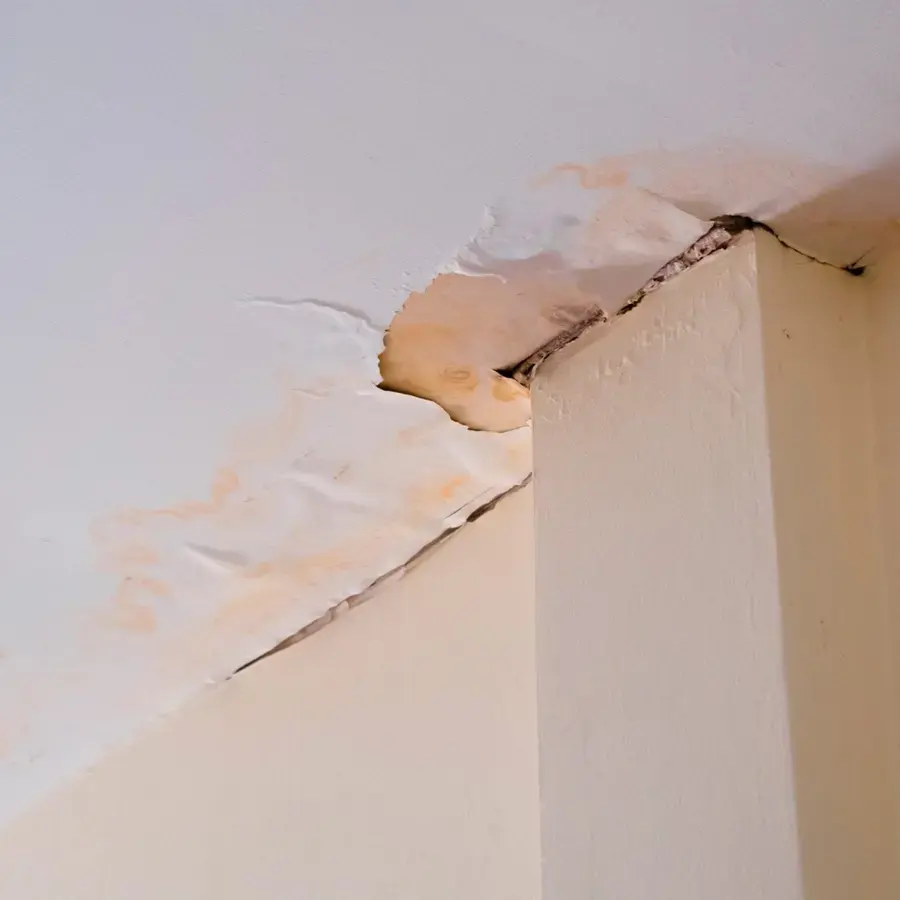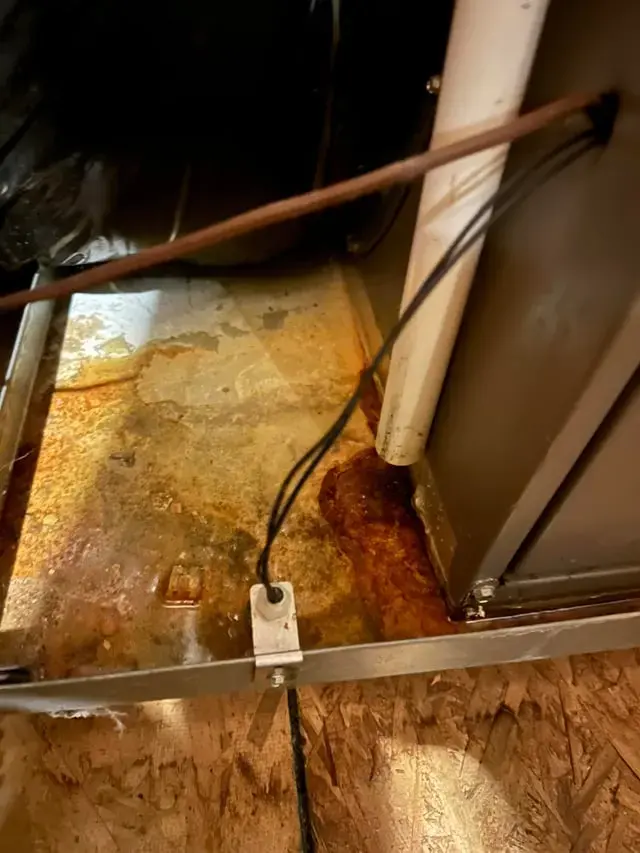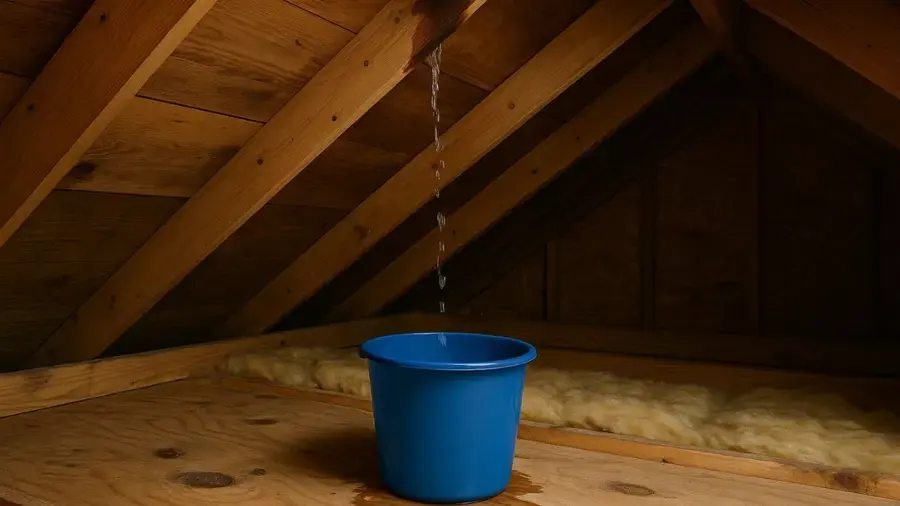
A roof leak is a slow water loss that looks small from below. Rain gets past the roof covering at a flashing joint, a vent pipe boot or a lifted shingle tab, runs along the underside of the decking or a rafter and soaks into attic insulation. The insulation holds it against the ceiling drywall until a stain or a sag appears in the room below.
Where roofs leak in Matthews
- Step flashing where a roof meets a wall or a second-story bump-out
- Rubber pipe boots that crack after years of summer sun
- Chimney flashing on older homes near downtown
- Valleys and low-slope sections that hold water during long storms
- Shingles lifted or torn by strong thunderstorm gusts
Drying from the attic down
A roofer tarps or repairs the roof first so no more water comes in. Then the tech who does the walkthrough uses thermal imaging from inside the rooms and meters in the attic to find how far the water spread. Blown or batt insulation that soaked through is removed, wet decking and rafters are dried with air movers and a dehumidifier in the attic, and the ceiling below is assessed: drywall that sagged or stayed wet for days is cut out, while a ceiling that dried quickly can often stay.
Documentation and repairs
Photos of the attic before insulation removal, the moisture map and daily readings go into the file for the claim. Roof and storm damage claims are handled differently from plumbing leaks, and the North Carolina Department of Insurance explains how homeowners claims work. The National Weather Service Greenville-Spartanburg office records severe storm reports for the area.