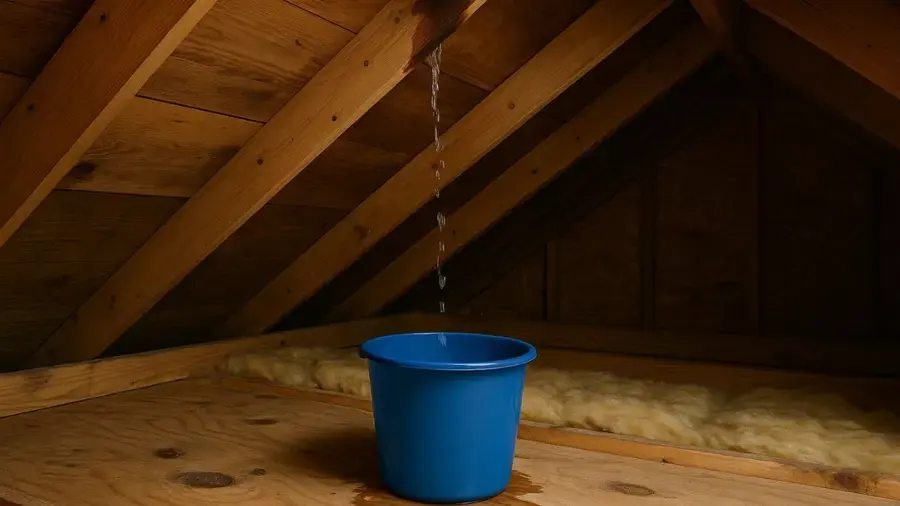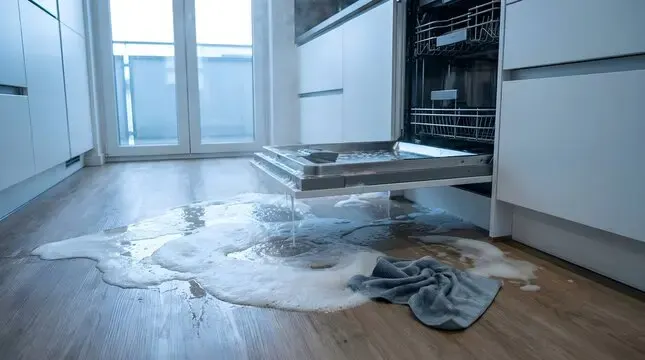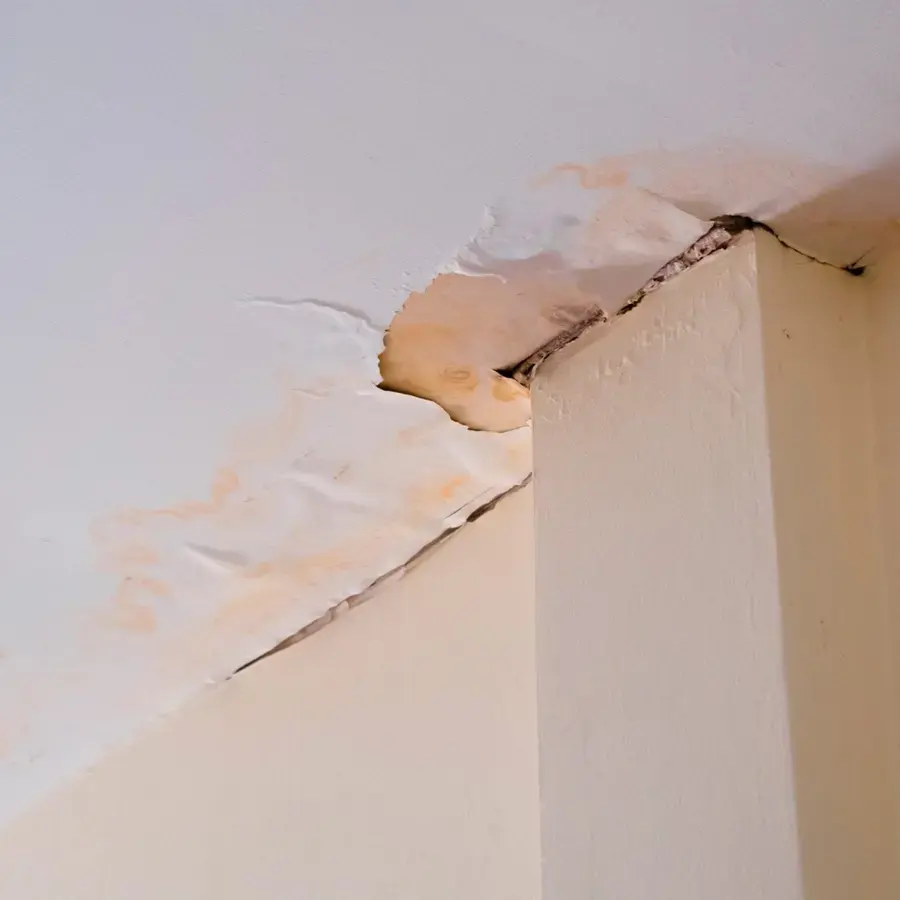
A ceiling leak is almost always a plumbing problem one floor up: a wax ring under a toilet, a failed shower pan, a tub overflow, a washing machine hose in a second-floor laundry room or a supply line in the joist space. Subdivisions built across Matthews from the 1990s onward put a lot of that plumbing over kitchens and family rooms.
Tracing the water before anything comes down
Water in a ceiling spreads along the joists and pools where the drywall is lowest, so the stain is not always under the source. The tech who does the walkthrough uses thermal imaging to see the wet pattern across the ceiling and a meter to confirm it, then checks the floor and walls of the room above. That map decides whether the ceiling can be dried in place.
- Dried in place: a ceiling that took clean water briefly and did not sag, dried with airflow and a dehumidifier, sometimes through small access holes.
- Cut out: drywall that sagged, crumbled, stayed wet for days or took toilet overflow water, removed in a clean section so the joist bay can dry.
- Light fixtures and fans: power off at the breaker until the fixture box is dry and checked.
Category matters on ceiling leaks too
A supply line or a tub filling is clean water. A toilet overflow is Category 2 or 3 depending on what was in the bowl, and insulation or drywall it soaked is removed. The sewage backup cleanup page explains how contaminated water is handled.
Drying and repairs
The drying team runs air movers and a dehumidifier in the room below and, where needed, the room above, and logs readings daily until the joists and any remaining drywall reach the drying goal. Repairs, new drywall and paint come after that. The U.S. Consumer Product Safety Commission publishes safety information on electrical hazards, and the EPA WaterSense Fix a Leak page covers finding bathroom leaks.