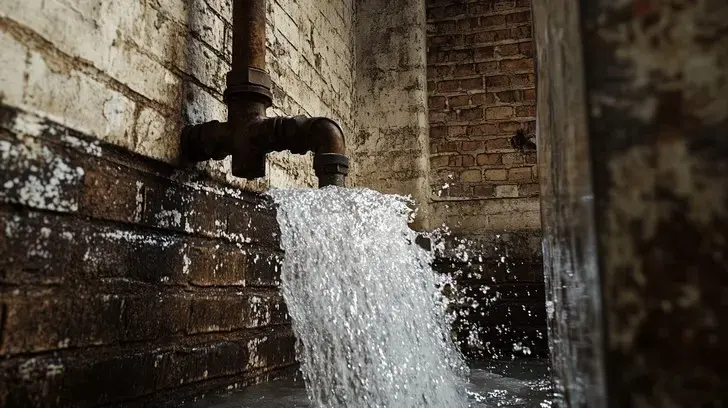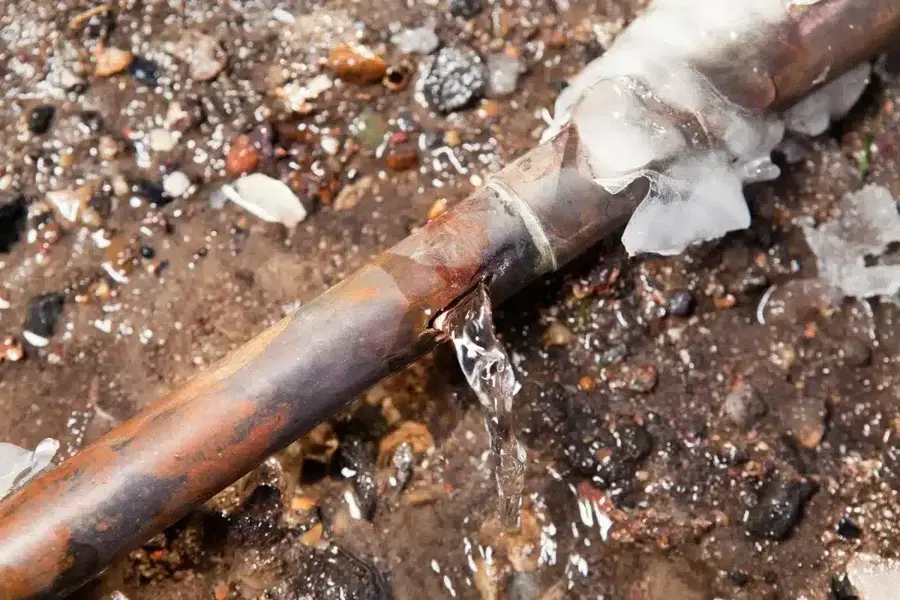
A pipe does not leak while it is frozen. The ice expands, splits the pipe or a fitting, and holds the water in place. The flooding starts when the temperature climbs back above freezing, often midday or the next morning, and often in a spot nobody checks, like the crawl space or the back of a closet on an outside wall.
Where pipes freeze in Matthews homes
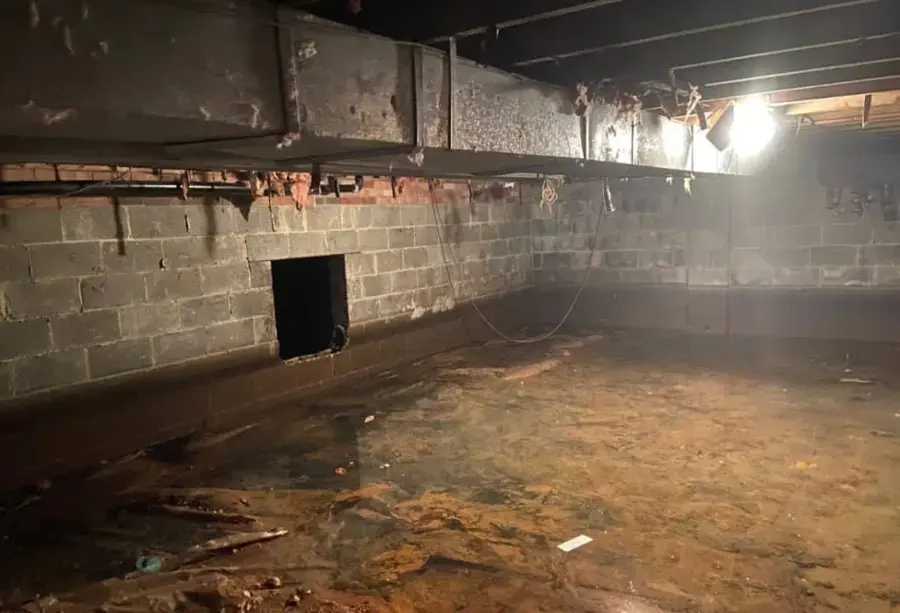
- Vented crawl spaces: supply lines run under the floor where cold air blows straight through the foundation vents.
- Exterior walls: kitchen and bathroom lines on north-facing outside walls, especially behind cabinets.
- Garages and hose bibs: lines to a garage sink or an outside faucet that was never shut off for winter.
- Attics: the occasional line routed over a ceiling in a converted bonus room.
What the cleanup involves
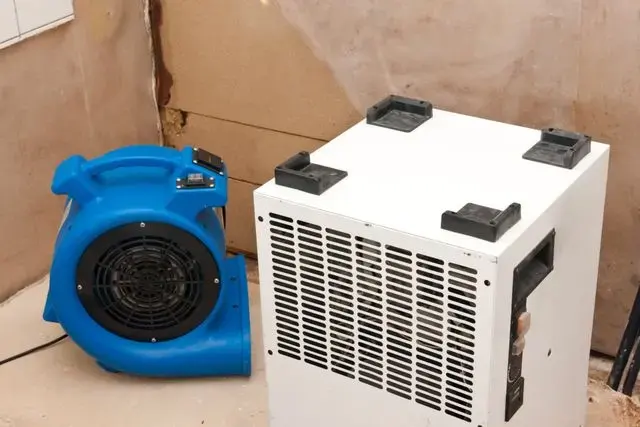
Once a plumber repairs the split, the extraction crew removes standing water from floors and the crawl space. The tech who does the walkthrough maps moisture along the wall where the pipe runs, in the ceiling below and across the subfloor. Wet crawl space insulation comes down, and the drying team dries the cavity, the framing and the subfloor from below with LGR dehumidifiers and air movers. Cold weather slows evaporation, so dehumidifiers often run longer in a winter loss than in summer.
Documentation for the claim
Freeze damage claims hinge on the file: photos of the split before repair, the moisture map, daily readings and the category and class of the loss. The structural drying page explains how dry is measured, and the National Weather Service Greenville-Spartanburg office issues the hard freeze warnings for the Charlotte area.