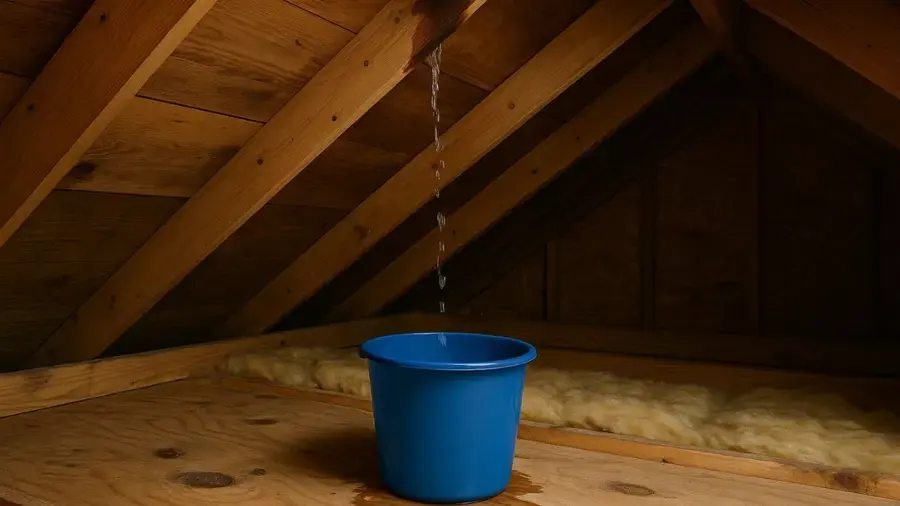
Commercial losses in Matthews tend to cluster along the business corridors: offices and medical suites off Sam Newell Road and near the hospital campus, shops and restaurants around Independence Boulevard and Windsor Square, and small storefronts downtown on Trade Street. The causes are familiar, burst sprinkler and supply lines, roof leaks on flat roofs, restroom overflows and HVAC condensate, but the stakes are different.
What changes on a commercial job
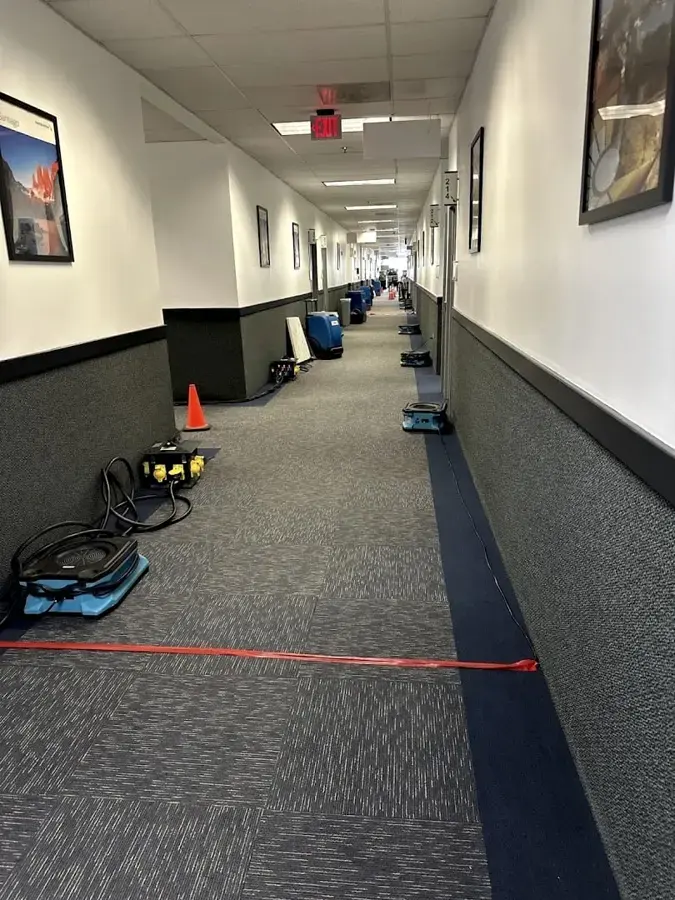
- Phased drying: the drying team sections off wet areas with containment so staff and customers can use the rest of the space.
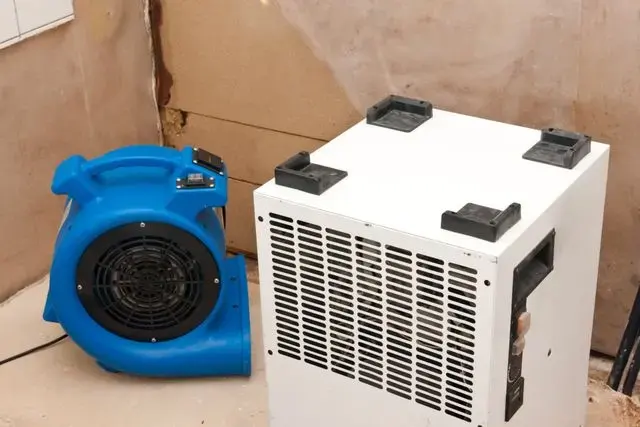
- Larger equipment: high-capacity LGR dehumidifiers and more air movers for open floor plans and commercial carpet tile.
- Access and scheduling: work around business hours where the readings allow it, and around tenants in multi-unit buildings.
- Stakeholders: the property manager, the building owner, tenants and one or more insurers all need the same information.
Carpet tile, ceiling tile and sprinkler water
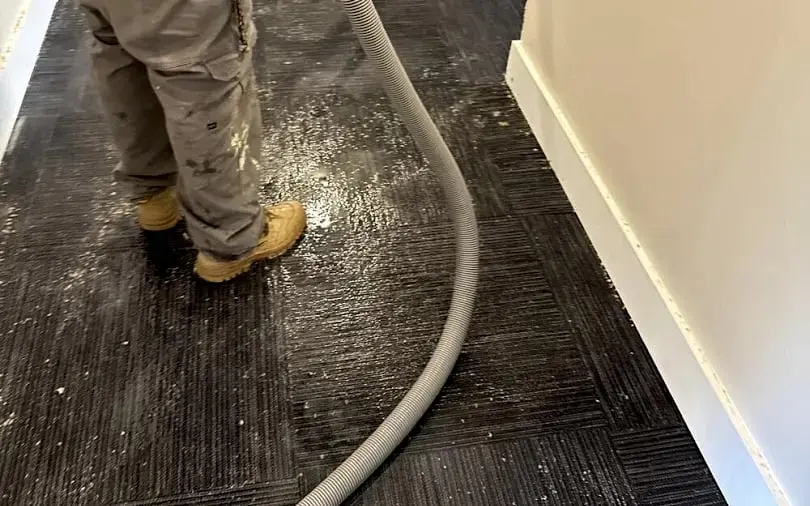
Commercial carpet tile can often be lifted, dried and reset. Ceiling tiles that took water are replaced, since they stain and sag. Sprinkler water is usually clean at first but picks up rust and sediment from the pipes, and the tech who does the walkthrough decides its category before drying starts.
Restaurants, medical and multi-unit buildings
Food service and medical spaces carry sanitation requirements, so contaminated water is contained, removed and treated with an EPA-registered antimicrobial before drying. In townhome rows and condo buildings, water crosses unit lines, and each affected unit gets its own readings and log. See structural drying for how the drying goal is measured.