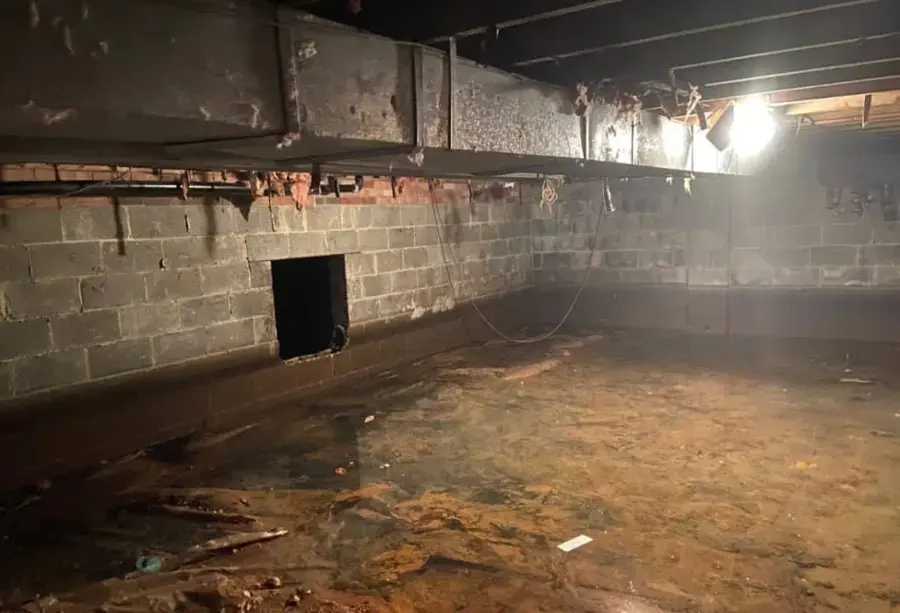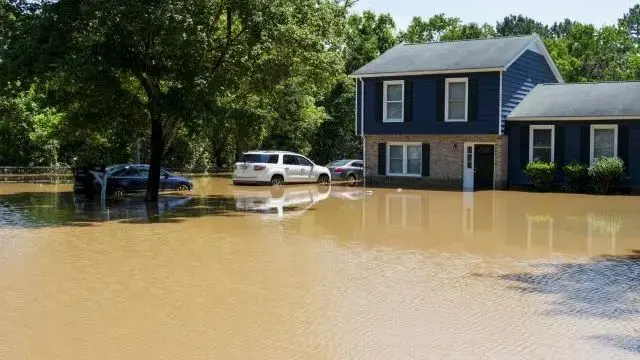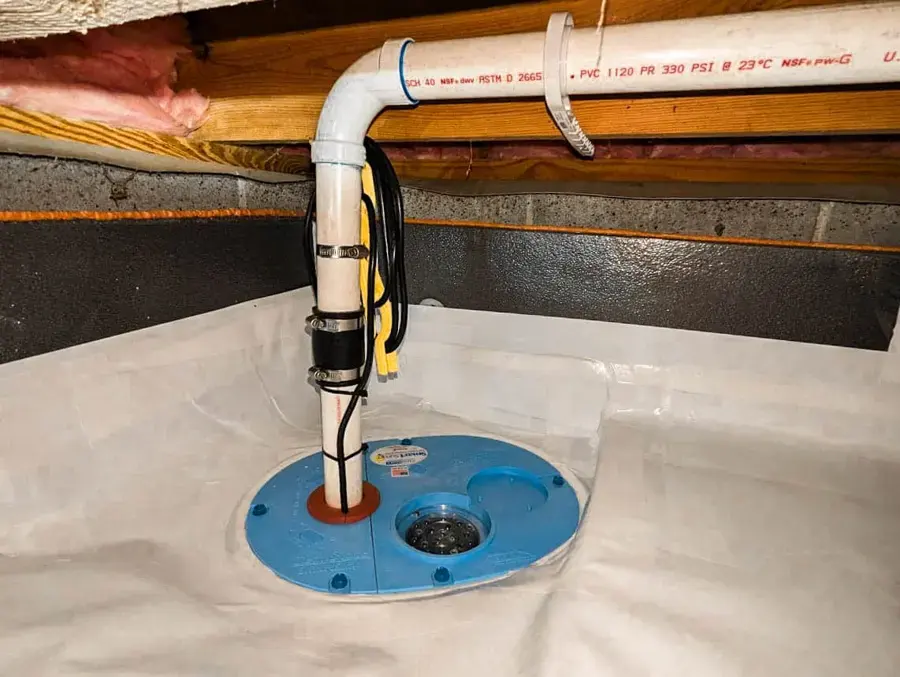
Sump pumps have become common under Matthews homes as more crawl spaces get sealed or encapsulated. They sit in a basin at the low point and push collected groundwater and runoff out through a discharge pipe. That works until the pump fails on the wettest night of the year.
Why crawl space sump pumps fail
- Power outages: storm remnants that bring the heaviest rain also knock out power, and a pump without a battery backup stops exactly when it is needed.
- Stuck floats: a float switch that catches on the basin wall or the power cord never tells the pump to start.
- Clogged intakes: red clay silt and debris work into the basin and choke the intake or the check valve.
- Age: many pumps run for years without anyone testing them, and motors wear out.
- Frozen or buried discharge lines: water pumped out comes right back if the outlet is blocked.
What the cleanup involves
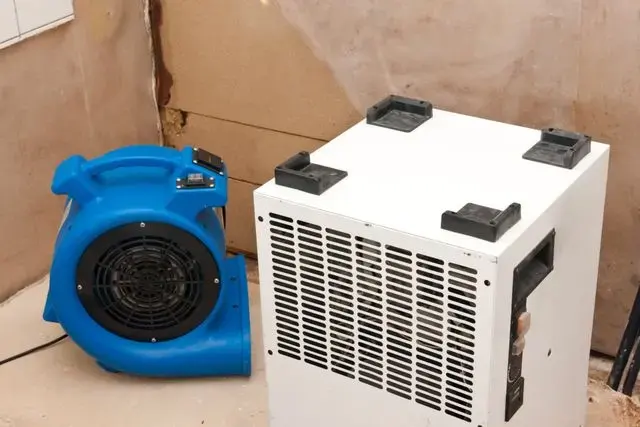
The extraction crew pumps down standing water and gets a working pump running so the space stops refilling. The tech who does the walkthrough checks the water: clean groundwater is Category 1 or 2, but water that crossed a yard or mixed with soil and debris is treated as Category 3. Wet insulation comes down, a vapor barrier holding water is lifted or replaced, and the drying team sets LGR dehumidifiers and air movers along the joists.
After the dry-out
Readings are logged until joists and subfloor match a dry reference in the same house. Then it is worth adding a battery backup, a high-water alarm and a yearly test. The National Weather Service Greenville-Spartanburg office posts flood watches for the Charlotte area, and the crawl space sump check scores how ready a pump is before storm season. For power-loss preparation, see Ready.gov on power outages.